

Creating a well-structured outdoor space can make your backyard feel like an extension of your home, perfect for dining, lounging, or entertaining. However, keeping those areas distinct while maintaining a cohesive and functional design can be tricky. The key is thoughtful planning and design elements that seamlessly define spaces without disrupting flow.
Here are five tips to help you create effective outdoor room separation.
1. Define Zones with Furniture Arrangements
One of the easiest ways to separate outdoor spaces is by using furniture placement to create natural boundaries. For instance, a dining area can have a centered table with surrounding chairs, while a lounging zone might feature a sectional or sofa set arranged in an L-shape. The direction of your furniture helps guide traffic and visually divides spaces.
For larger patios, consider adding a freestyle layout with standalone chairs or benches facing away from one zone and toward another. This works particularly well in spaces where entertaining is a priority, as it creates separate pockets perfect for different activities.
2. Incorporate Outdoor Rugs
Outdoor rugs are stylish and functional tools for separating spaces. A vibrant rug beneath your dining set can frame and anchor the area, while a contrasting pattern under a lounge set signals a distinct space for relaxation. By defining zones with rugs, you create a visual separation without adding physical barriers.
Choose materials like polypropylene or other weather-resistant options that can handle outdoor conditions while remaining low-maintenance.
3. Use Plants as Natural Dividers
Plants offer a beautiful and versatile way to separate outdoor rooms while infusing your space with texture and color. Tall potted plants or shrubs can act as natural screens to define areas without completely blocking views, creating a more open and inviting atmosphere. Lush greenery can separate zones softly, whether it’s a row of planters, hedges, or a vertical garden.
For versatility, choose movable planters. Combine tall grasses with cascading greenery for eye-catching yet practical partitions that add privacy and style without fully enclosing the space.
4. Add Outdoor Screens or Dividers
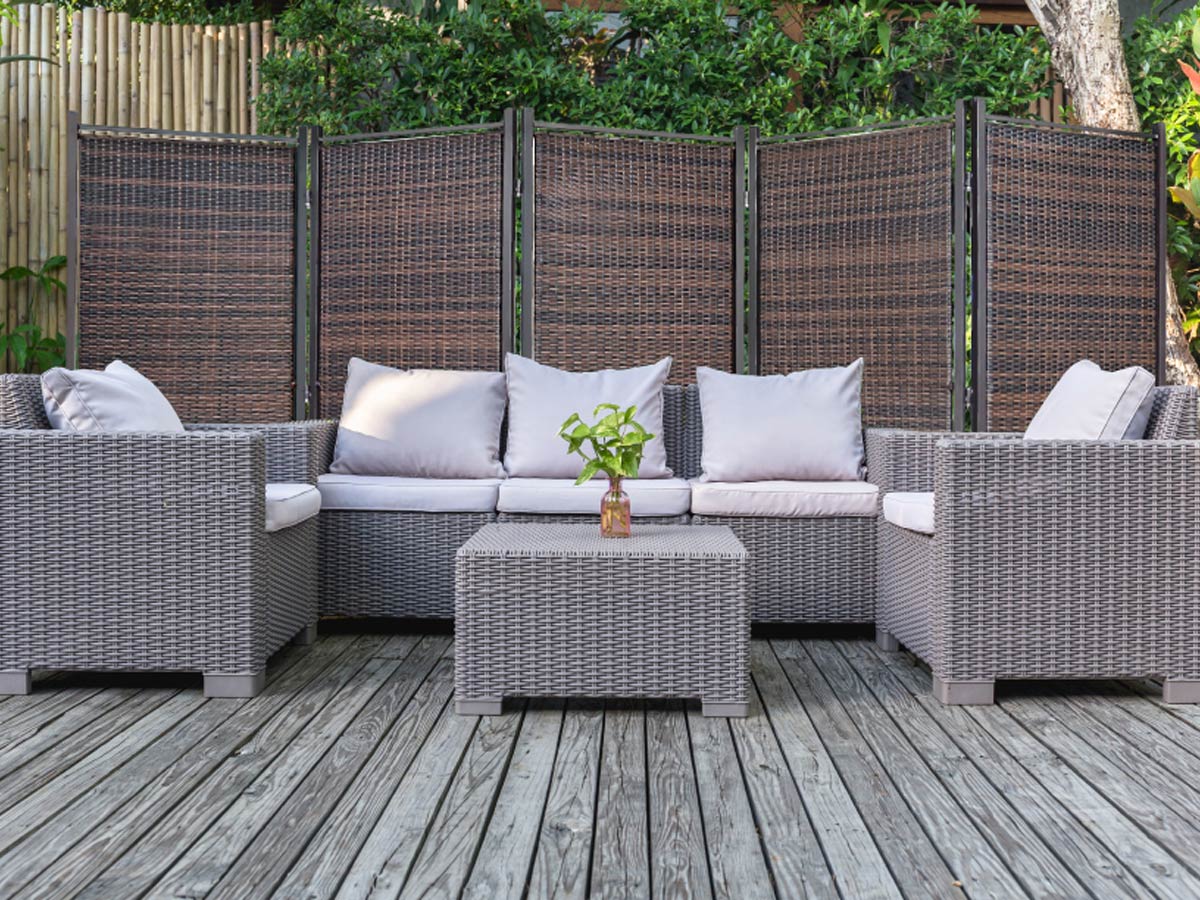
For a more structured look, outdoor screens or dividers offer a striking way to define separate spaces. Whether made of wood, metal, or lattice, these panels create a chic boundary while still allowing airflow and light. Decorative screens can double as design features, adding an element of sophistication to your outdoor space.
Freestanding options are ideal for renters or those who like to rearrange spaces frequently. Use lightweight materials if mobility is a priority.
5. Highlight Areas with Layered Lighting
Lighting is a powerful tool for creating separation between outdoor zones, especially for evening use. Use string lights over dining areas to centralize focus, lanterns for cozy lounging corners, or pathway lights to guide movement between spaces. Layered lighting not only defines zones but also sets the mood for each area.
For a sleek look, solar-powered or LED fixtures can seamlessly blend with modern outdoor designs. Meanwhile, candles and lanterns can add a soft, flickering glow for a more rustic or romantic vibe.
Conclusion
With thoughtful design and the right elements like furniture, rugs, plants, screens, and lighting, you can turn your outdoor area into a multi-functional retreat. Take the first step by selecting design features that align with your needs and personal style. From entertaining guests to relaxing solo, your well-organized outdoor space will be a game-changer for your home and lifestyle.
