

Water heaters have an unglamorous job, and they do it quietly for years. That is the problem. Because nobody thinks about them until the shower turns cold, small warnings get ignored until a tank leaks or fails outright. The good news is that most units give plenty of notice. If you know what to listen for, look at, smell, and feel, you can usually plan a repair or replacement on your schedule and not during an emergency.
What you hear
Sound is often the first clue. Rumbling, popping, or banging from the tank usually points to sediment that has built up on the bottom. Minerals settle out of the water over time, and the heating process traps small pockets of water beneath the sediment layer. When those pockets boil, they make the noise. Besides the racket, sediment makes the unit work harder, wastes energy, and wears out the tank sooner.
Energy.gov notes in its guide to storage water heaters that routine maintenance, depending on the model, can include flushing water from the tank regularly, and that having a qualified plumbing and heating contractor install the unit is the best way to get it right. Check your manual for the schedule that applies to your model. Hissing or sizzling sounds deserve attention too, since they can mean a leak dripping onto a hot surface or a failing valve.
What you see
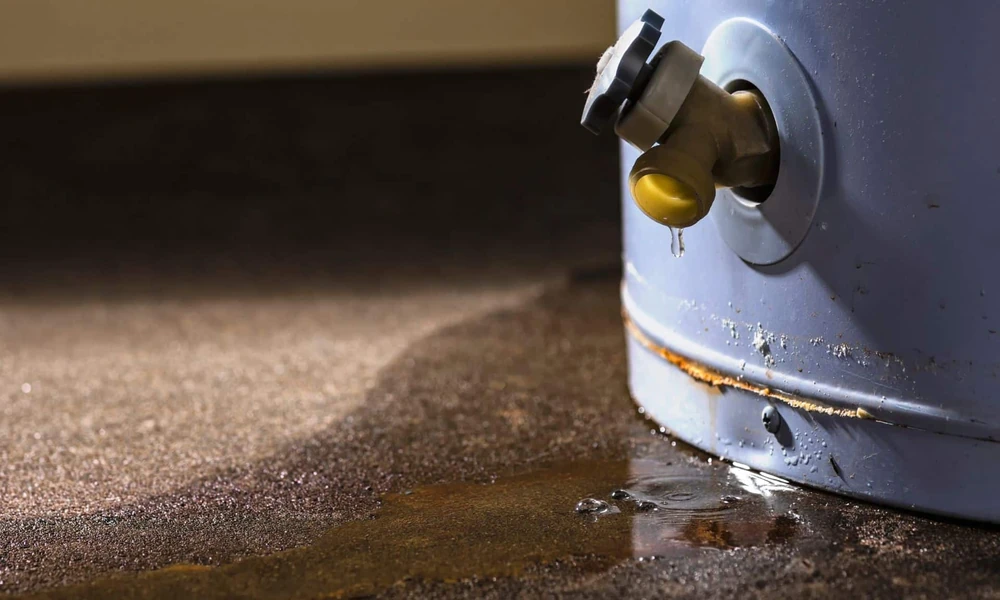
Take a few minutes to look over the unit and the floor around it. Rust colored water from the hot tap only, not the cold, suggests the inside of the tank is corroding. Puddles or damp spots near the base, rust streaks on the tank, or corrosion on the pipe fittings are all signs of trouble. A tank that is actively leaking from its body generally cannot be repaired, because the leak means the steel is failing.
A qualified contractor such as Actionaire can inspect the tank, valves, venting, and connections, check for corrosion and leaks, and explain whether a repair makes sense or the unit is at the end of its life. Ask them to show you what they find, and request photos of any rust, scale, or damage. A clear picture of the problem makes it easier to compare options.
If you find water pooling around the tank, turn off the power or gas supply and shut the cold water valve to the heater, then call for service. Do not wait to see whether it dries up.
What you smell
A rotten egg odor in the hot water often comes from bacteria reacting with minerals in the tank, and it sometimes ties back to a worn anode rod, the part that protects the tank from corrosion. A contractor can test and treat the system, and in some cases replace the rod or adjust the setup.
A gas smell is a different matter and is a safety issue. If you notice the smell of gas near a gas fired water heater, do not touch switches or try to relight anything. Leave the house, and call your gas utility or emergency services from outside. Also pay attention to soot, scorch marks, or a flame that looks yellow or uneven, since those can point to venting or combustion problems and a possible carbon monoxide risk. Make sure you have working carbon monoxide alarms on every level of the home.
What you feel
Your own daily experience tells you a lot. Water that never gets as hot as it used to, hot water that runs out much faster than before, or temperatures that swing up and down all suggest the heating elements, thermostat, or burner are failing, or that sediment is insulating the water from the heat. Low hot water pressure can point to mineral buildup in the pipes and fixtures.
Pay attention to the temperature setting as well. Many manufacturers ship units set higher than most households need, and lowering the thermostat to around 120 degrees Fahrenheit is commonly recommended to cut energy use and reduce scald risk. Do not make the change on a gas unit or a unit with a problem you do not understand without checking the manual or asking a professional.
What the paperwork says
Look at the label on the tank. The serial number usually encodes the manufacturing date, and the manufacturer can help you decode it. Most storage tank water heaters last roughly 10 to 15 years, so a unit in that range deserves extra attention even if it seems to work fine. Water quality, usage, and maintenance all push that number up or down.
If your heater is near the end of its life, start planning before it fails. Think about household size, hot water demand, available space, and fuel type. Storage tanks, tankless models, and heat pump water heaters each have different upfront costs, efficiency, and installation requirements, and a professional can help match the type to your home. Also ask about warranty terms, permit requirements, venting changes, and what happens to the old unit.
A water heater that fails on its own schedule usually does so at the worst moment, often with water on the floor. Spotting the signs early gives you time to compare quotes, choose the right replacement, and avoid the cost of water damage along with the cost of a new unit.
