

Drive through almost any suburb that baked through a dry summer this year and you start to notice the pattern. A front yard that used to be a flat green sheet of turf now carries a bed of pale gravel, two or three ornamental grasses leaning in the wind, and a boulder set down like punctuation. It doesn’t read as neglect. It reads as a decision. And it is happening far too often to be a coincidence.
The turf lawn had a good century. It signaled tidiness, a little prosperity, a weekend spent doing the right thing with a mower. What it never signaled was cost, and that is the part homeowners have started adding up.
The lawn math stopped working
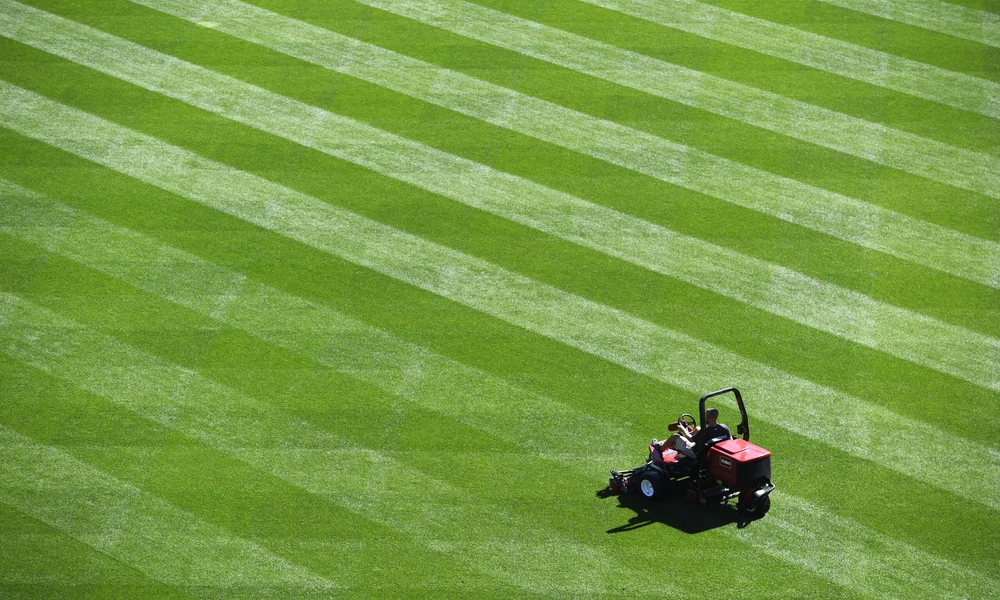
Run the numbers on a conventional lawn and the romance fades quickly. Depending on climate, turf wants somewhere between thirty and sixty inches of water across a growing season, most of it during the exact months when municipalities are begging people to cut back. Layer on fertilizer, weekly mowing, aeration, the occasional reseed, and the hours are not trivial either. For a lot of people the tipping point was a single utility bill after a heat wave.
That reappraisal is what sends homeowners looking at decorative landscaping stones in the first place, and usually not as a grudging compromise. Once you stop treating stone as the thing you put down when grass won’t grow, it becomes a design material with its own vocabulary: color, grade, sheen, the way a two-inch pebble catches light differently than a flat slate chip.
Retailers noticed before the trade press did. Bagged stone and bulk aggregate have crept toward the front of the seasonal aisles at Home Depot and Lowe’s, and Houzz and Pinterest have spent three years feeding people images of Mediterranean gravel courtyards captioned “low maintenance.” Demand rarely announces itself politely. It just shows up in the loading dock.
What stone actually does for a garden
Set aside the water savings for a second, because the functional case is broader than most people expect. A well-laid stone bed drains. Rain moves through it instead of pooling on compacted clay, which protects the crowns of nearby plants and keeps paths walkable an hour after a downpour. A two to three inch layer of gravel also works as mulch, holding soil moisture underneath while the surface dries fast enough to discourage the weeds that love a damp bed.
Then there is the look, which is where grade and color start to matter. Slate chippings, with their irregular flat angles, throw a matte, layered texture that suits a modern or naturalistic planting. Polished pebbles in black, off-white, or mixed tones do the opposite, reading crisp and almost architectural around a water feature or a contemporary entry. Pale gravels bounce light into a shaded side yard. Darker aggregate anchors a bright, exposed bed so it doesn’t glare. None of this is decoration for its own sake; each choice is doing a job.
There is a thermal argument too, one that rarely makes the brochures. Stone holds warmth. A pale gravel path releases the day’s heat slowly into a chilly spring evening, giving heat-loving plants like lavender and sedum exactly the microclimate they came from. Turf does none of that.
The look isn’t new, it’s borrowed
It helps to remember that gravel gardening is not a 2020s invention dreamed up on social media. Beth Chatto famously planted her gravel garden in a dry corner of Essex in the early nineties and never watered it, proving a bed of stone and drought-tolerant perennials could look generous rather than austere. Go further back and the Japanese dry garden treated raked gravel as a contemplative surface centuries ago. Mediterranean courtyards have used loose stone against heat and drought for as long as there have been Mediterranean courtyards.
So the current wave is less a trend than a rediscovery. What changed is the audience. Techniques that used to belong to botanic gardens and serious plantspeople are now landing in ordinary front yards, helped along by suppliers who will palletize the exact grade and color a homeowner wants and ship it to the driveway.
Where people get it wrong
Plenty of stone installations do end up looking like a parking lot, and the failures are almost always predictable. The most common one is laying landscape fabric under everything in the belief it stops weeds forever. It doesn’t. Within a couple of seasons, organic debris settles into the gravel above the fabric, breaks down into a thin soil, and weeds root happily in that layer while the fabric traps water and frustrates the plants you actually want. Skip the blanket approach and manage the edges instead.
The second mistake is grade. Pea-sized gravel migrates underfoot and scatters into lawns; oversized cobble is miserable to walk on. For paths, a sharp, angular stone in the half-inch to three-quarter-inch range locks together and stays put. For beds, you have more freedom. And skipping edging altogether guarantees that within a year your clean stone line has bled into the surrounding soil.
Choosing stone like you mean it
Buy for the setting, not the swatch. A color that looks striking in a small sample bag can overwhelm a whole bed, so it is worth ordering a sample or two before committing to a pallet. Coverage is easy to underestimate as well: a standard bag of decorative stone covers only a square foot or so at a proper two-inch depth, which means a modest front bed adds up fast. Measure the area, decide on depth, and order with a little margin.
Think about access before the stone lands, not after. Leave a clear route to any plant you will need to reach, and keep the depth honest at the edges where gravel thins and weeds creep in. A quick seasonal rake to lift fallen leaves before they rot into soil is roughly the whole chore list, against the standing appointment a mower demands from April to October.
It also pays to buy from someone who deals in stone specifically rather than treating it as a seasonal afterthought. A specialist will know the difference between a gravel meant for drainage and one meant for a foot path, will palletize the exact grade and color to the driveway, and can steer a first-timer away from the pretty stone that turns out to be miserable to walk on. That guidance is worth more than a couple of dollars saved per bag.
The lawn is not dead. It still earns its place where kids and dogs need somewhere soft to land. But its monopoly on the front yard is over, and the replacement is not a slab of concrete or a field of plastic turf. It is stone, chosen with the same care anyone would give a paint color, doing more work for less water than the grass it quietly displaced.
