

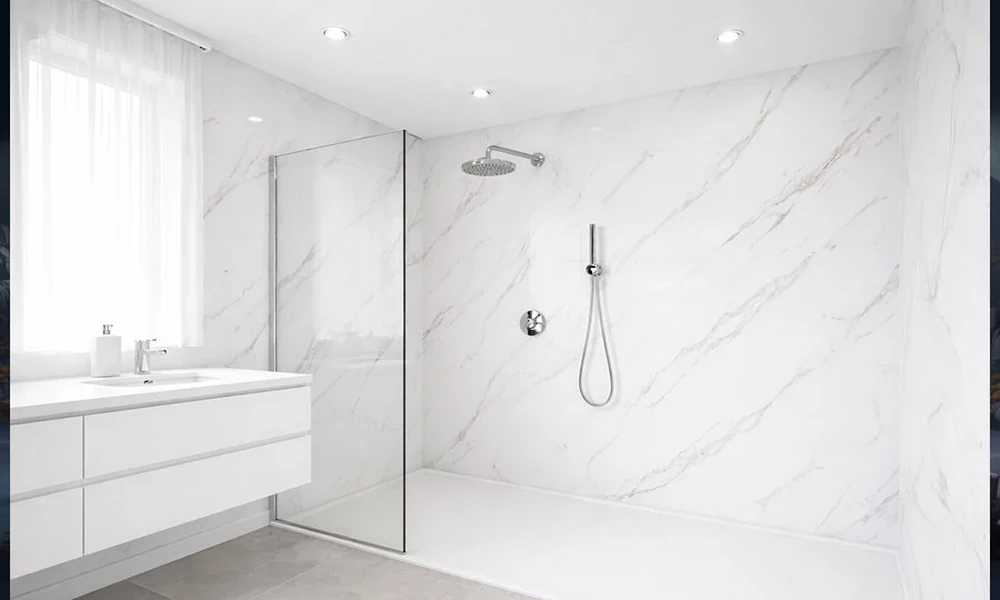
For years, wall tile lived in the shadow of floor tile. It was the afterthought, the backsplash strip, the practical surround in a shower. That has changed. Wall tile has become a design statement in its own right, appearing on feature walls, full-height bathroom surrounds, and kitchen backsplashes that anchor entire rooms. The shift is not just about aesthetics. It reflects real advantages that wall tile offers, and understanding them helps homeowners use it well.
Why walls are different from floors
It is tempting to treat wall tile as floor tile mounted vertically, but the two serve different purposes and follow different rules. Floor tile must withstand foot traffic, impact, and abrasion, which demands hardness and thickness. Wall tile faces none of these pressures. Freed from the need to resist wear, it can be thinner, lighter, and available in finishes and textures that would never survive on a floor.
This distinction opens up creative possibilities. A homeowner exploring options for a feature wall or shower surround can click here to see textures, glosses, and formats designed specifically for vertical surfaces. Glossy finishes that would be dangerously slippery underfoot become luminous and easy to clean on a wall. Delicate textures that would chip on a floor add depth and interest at eye level. Choosing tile made for walls, rather than repurposing floor tile, gives access to this fuller range.
The maintenance argument
One of wall tile’s underrated strengths is how easy it is to keep clean. In a shower, a tiled wall resists moisture far better than painted drywall, which eventually succumbs to mold and peeling. In a kitchen, a tiled backsplash wipes clean of grease and splatter with a damp cloth, where paint would stain and degrade. This practicality explains why tile has held its place in the wettest, messiest parts of the home for centuries.
The key qualifier is grout. Like any tile installation, wall tile is only as low-maintenance as its grout allows. Porous cement grout in a shower absorbs moisture and grows mold, undermining the very advantage tile offers. Using a quality grout, sealing it where appropriate, and choosing larger-format tiles that reduce the number of grout lines all contribute to a wall that stays clean with minimal effort. The tile does the heavy lifting, but the grout choice determines how much work the homeowner faces over the years.
Scale changes the feeling of a room
The format of wall tile dramatically affects how a space feels. Large-format tiles, with their minimal grout lines, create a clean, expansive, contemporary look that makes small rooms feel larger. Small mosaics, by contrast, add texture, pattern, and a handcrafted quality, but multiply the grout lines and the visual busyness. Neither is better; they simply produce different effects.
This is where wall tile becomes a genuine design tool. A single feature wall in a bold pattern can define a room without overwhelming it. A full surround in a subtle large-format tile creates a serene, spa-like atmosphere. Playing with scale, color, and placement lets homeowners achieve looks ranging from minimalist to richly textured, all with the same basic material. Retailers like IKEA and specialty suppliers have expanded their wall tile ranges precisely because demand for this versatility has grown.
Getting the installation right
Wall tile installation carries its own challenges, distinct from floors. Gravity works against the installer, so tiles must be supported as the adhesive sets, and the substrate must be sound and properly prepared, especially in wet areas. In a shower, a waterproofing membrane behind the tile is essential. Skipping it leads to moisture penetrating the wall, causing rot and mold that no amount of surface tile can fix.
Layout planning matters enormously on walls, because the eye notices vertical alignment more readily than it does on floors. A poorly planned layout that leaves awkward slivers of cut tile at the ceiling or in corners cheapens the whole result. Taking the time to map out the layout, centering the pattern and planning cuts thoughtfully, separates a professional-looking wall from an amateur one. This planning costs nothing but attention.
Coordinating with the rest of the room
Wall tile rarely exists in isolation. In a bathroom, it interacts with the floor tile, the vanity, the fixtures, and the lighting. The most successful installations treat wall tile as one element in a coordinated scheme rather than a standalone feature. A bold patterned wall pairs best with restrained choices elsewhere, while a neutral tiled surround gives freedom to be adventurous with fixtures and accessories.
The relationship between wall and floor tile deserves particular thought. Matching them exactly can feel monotonous, while clashing them creates visual chaos. The sweet spot usually involves complementary tiles that share a palette or a material family without being identical. A knowledgeable supplier can help identify pairings that work, drawing on experience with how tiles read together in a finished space rather than as isolated samples.
Finish and light work together
One aspect of wall tile that photographs rarely capture is how finish interacts with light. A glossy tile bounces light around a room, brightening a windowless bathroom and making a small space feel more open. A matte tile absorbs light, creating a softer, more muted atmosphere that suits a bedroom en suite or a spa-inspired scheme. The same tile pattern can feel entirely different depending on which finish you choose.
This interplay deserves thought during selection, ideally by viewing samples in the actual room and under its real lighting rather than under showroom spotlights. A tile that looks perfect in a bright display can read quite differently on a dim wall at home. Because wall tile often sits at eye level, these subtleties register more strongly than they would on a floor. Taking the time to test finishes in context prevents the disappointment of a wall that looks flatter or shinier than expected once installed.
The cost equation over time
Wall tile carries a higher upfront cost than paint, which deters some homeowners. Viewed over the life of the surface, though, the math often favors tile. Paint in a shower or behind a sink needs redoing every few years as moisture takes its toll. Tile, installed correctly, lasts decades with only occasional grout maintenance. In the wettest parts of a home, the durable option frequently proves cheaper in the long run.
A material worth taking seriously
Wall tile has earned its place as a design element rather than a mere practicality. Its combination of easy maintenance, moisture resistance, and creative range makes it one of the most versatile materials available to a renovator. Used thoughtfully, it can transform a room; used carelessly, it can date it or complicate its upkeep.
The homeowners who get the most from wall tile are those who understand both its practical advantages and its design potential. They choose tile made for walls, plan the layout with care, pair it wisely with the rest of the room, and respect the waterproofing requirements in wet areas. Approached this way, wall tile delivers on both fronts, giving a space that looks striking and stays that way with minimal effort for decades to come.
